How to Get Started With DIY Passive Radar
Now anyone can get started for a few hundred dollars.
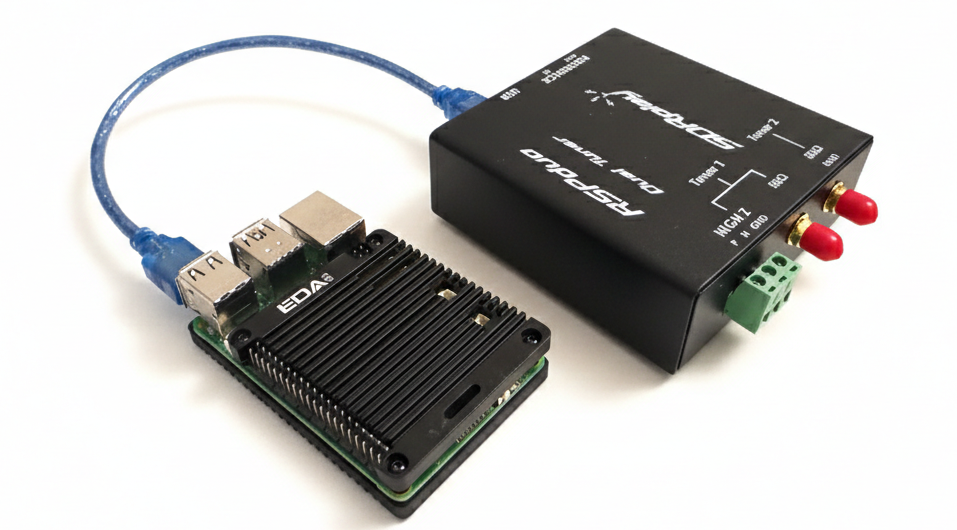
Thanks to hardware advances, passive radar is now available to anyone, even without a big budget or a background in signals engineering. All you'll need are 4 things: a Software Defined Radio (SDR), a Digital Signal Processor (DSP), antennas, and an illuminator of opportunity.
1) Software Defined Radio (SDR)
SDRs are analog-to-digital converters that take in physical radio signals and convert them to digital signals that a computer can process, and vice versa. For passive radar, we only need to receive, not transmit.
For passive radar, the SDR needs at least two input channels, and they must be coherent, meaning the phase difference between the two input signals remains consistent. This is also commonly described as "being on the same clock" or "sharing an oscillator."
It's also possible to make two single-channel SDRs coherent by connecting them to share a clock reference.
2) Digital Signal Processor (DSP)
For the DIY case, you can either use an existing computer or purchase a dedicated microprocessor, such as a Raspberry Pi or similar.
3) Antennas
You'll need at least two antennas, a reference antenna for the direct signal, and a surveillance antenna for picking up target echoes. Most people who have had success with passive radar use Yagi antennas, either off-the-shelf or home-built.
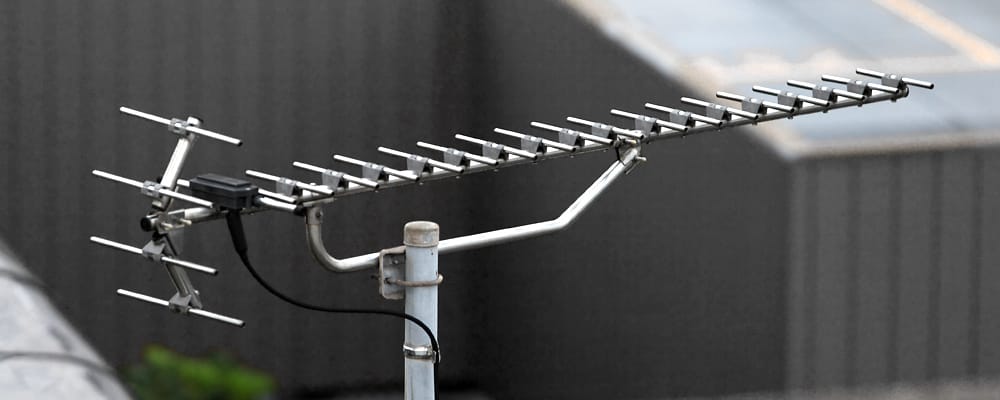

Some SDRs come with their own antennas, but these are usually small dipole antennas, which generally aren't sufficient for passive radar applications.
4) Illuminator of Opportunity
This is generally a nearby FM or digital TV broadcast tower, though it is possible to use other radio sources such as satellites, 5g towers, and even the Sun.
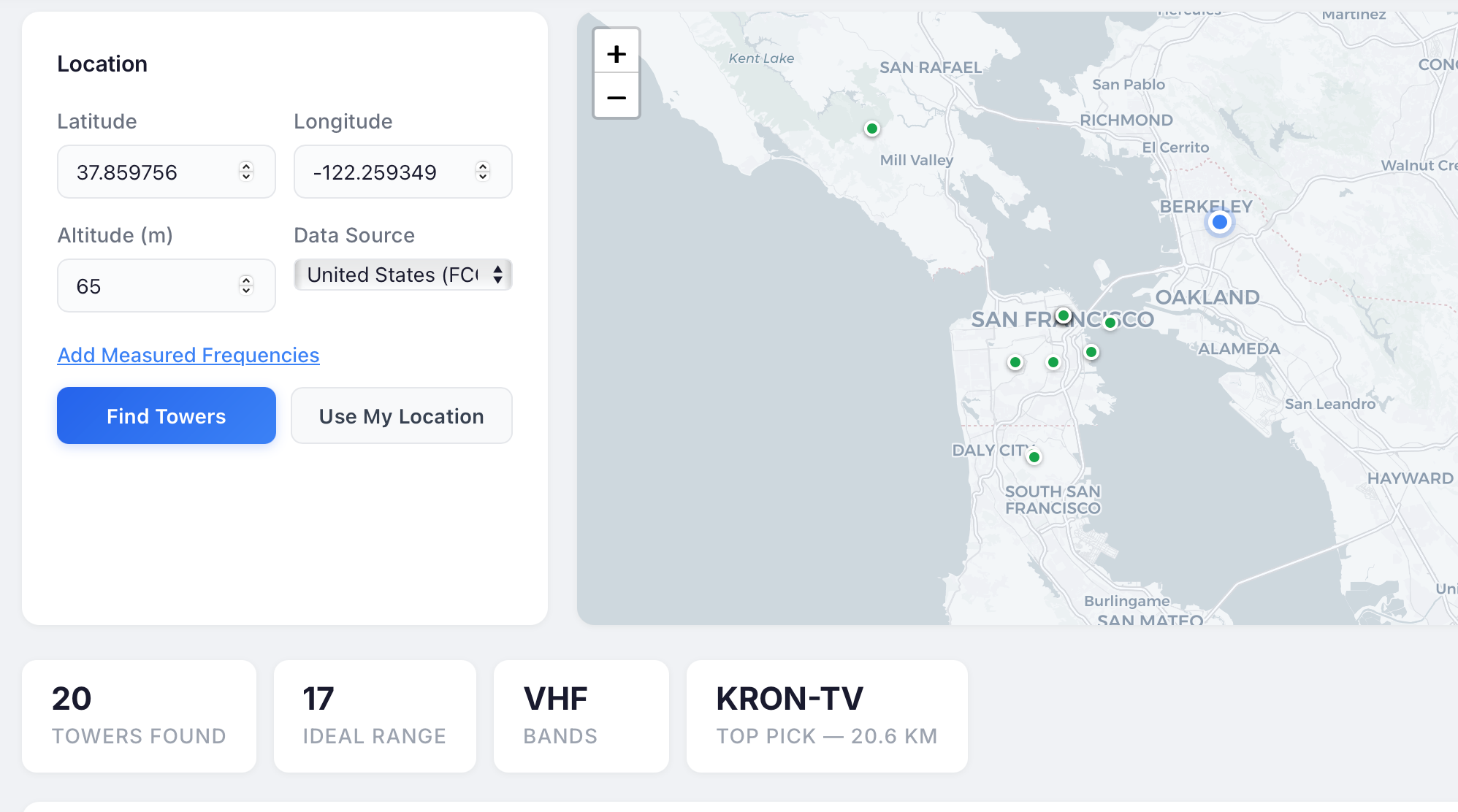
However, for most use cases, TV signals are best, and you can find towers near you from your country's broadcast authority database, which often includes a search function. If you are in the US, Canada, or Australia, however, you can use this web app to find suitable nearby towers.
Radar Stack Options
The hardware you use will be determined by your budget and your interest in tinkering, compared to turnkey solutions.
Budget Tinkering ~$30
For the absolute lowest cost, you can use your own computer as a DSP and make a coherent two-channel SDR from two RTL-SDR dongles, available on AliExpress for around $15. RTL-SDRs are mass-market TV tuner USB dongles, but it was discovered that they can be put into a debug mode that allows them to be used as general-purpose SDRs.
By removing some components and soldering, two of these can be made to share the same clock and thus be made coherent. See Max Manning's blog for a description of this process and a link to his codebase for the signal processing.
Antennas can be made from lengths of wire or aluminum tubing, cut to length and arranged to match your desired frequency.
Blah2 with a Computer You Have ~$400
The most developed open-source passive radar software is Blah2 (github, discord), and below is an intro video for it:
It supports a number of software-defined radios, though most people use the RSPduo because it's a good value and is the device Blah2 was tested on most extensively. That said, there are cheaper options, such as the mentioned homemade 2x RTL-SDR or the Pluto+ SDR.
You'll need a Linux computer to run the software, which, depending on your machine, can be tricky to get working. $400 will about cover the SDR, cables, and antennas.
Blah2 Kits with a Raspberry Pi 5 ~$500
There are two options for purchasing pre-made kits that use Blah2:
Retina.fm: An open-source project bundling an RSPduo, Raspberry Pi 5, accessories, and a pre-flashed SD with a custom Raspberry OS for no-code radar setup. The kit is $400, cheaper than buying components individually, though the OS image is available if you prefer to source parts yourself. Estimate ~$100 for antennas and cables. (Full disclosure: I run this project)
Eldeaon Nemisis: A turn-key commercial system that comes in with an enclosure, self-positioning antenna, GPS, and tripod mounting threads. It is the easiest to set up of all the options, at the cost of smaller antennas, so a smaller effective range. Priced at $500.
Kraken with Custom Code ~$1000
The Kraken is a coherent 5-channel SDR that retails for $750. It can be used with Blah2, but the 5 channels give it Angle of Arrival (AoA) capability, meaning target direction-finding.
With two-channel SDRs, only a target's bistatic range and Doppler shift can be determined, not its direction, whereas Kraken can determine this. For regulatory reasons, Kraken doesn't publish its own passive radar code, but Bob McGwier has published a repo for this purpose.
You'll need antennas and cables. Kraken sells an antenna kit, though they're probably too small to work well for passive radar. You can purchase and connect larger off-the-shelf ones, though, along with cables for ~$250.
If You Need Help
You can find help on the Blah2 discord, or if you're interested in being a beta tester for a passive radar kit, please email: jehan@passiveradar.com.